

I told you my next blog post would be delayed…..
I recently had the amazing opportunity to visit both Saigon, Vietnam and Hong Kong on vacation with my parents and my boyfriend. In between all the historic sites, markets, temples, museums, gay bars, etc, etc that we visited, I got to eat a lot of great food, including many dishes (and animals) I had never tried before. Here are the most interesting or memorable things I ate for the first time during my trip, and what I thought of them.
–Bánh xèo : I had this several times in Vietnam and really fell in love with it. It’s a crispy rice flour crepe, bright yellow from turmeric, folded over various fillings like bean sprouts, mushrooms and shrimp. To eat it, you cut a slice of the crepe, wrap in lettuce and fresh herbs, pick up with your hands and dip in nước chấm, a sweet and salty dipping sauce. Aside from the intricate combination of flavors and textures and the fun of putting it all together, it has an excellent name: bánh, from French pan, is the Vietnamese word for cake or bread. Xèo is onomatopoeia for the sizzling sseeooww sound the batter makes when dropped into a hot skillet. I like to translate it as “sizzlecake.”
– Centella juice : Called rau má in Vietnamese, centella is an herb with medicinal properties. I had never heard of it before seeing it on a menu in Saigon. It was served as a dark green smoothie that tasted exactly like raw green beans mixed with sugar. I finished it, but I don’t think I’d order it again.
– Fruit : In Vietnam I tried several kinds of fresh fruit, including the delicious sweet-and-sour mangosteen, the enormous jackfruit and pomelo, and the funky-looking wax apple (which I hated). Not to mention ramubtan, durian, and various other awesome tropical fruits I’ve had the opportunity to eat in the past. I also had the first good dragonfruit I’ve ever eaten; in Vietnam they were quite flavorful, but the ones in the USA always seem to taste like crunchy, expensive water. Vietnamese people sometimes dip fruit into salty dried shrimp powder, which I rather enjoyed (although it still wasn’t enough to make me like wax apple. Blegh.)
 –Molten salted egg yolk French toast : This is not Hong Kong French toast, which is also a thing, but the specialty gimmick of a particular dim sum place in Hong Kong. Slice into the crispy fried toast and bright yellow egg yolk, which is both salty and sweet, oozes all over your plate. Or, get the even sweeter variation filled with bright purple taro. We got both, along with a few other items. I guess I go straight for the carbs, because when we first tried to place our order, the waitress advised us against ordering “too much bread”. Followed her suggestion, but still felt about ready to roll down the hills of Hong Kong after that meal. Worth it.
–Jellyfish : In Hong Kong. The Romans ate this quite a bit, so I naturally had to try. I liked it! Cut into fine, pale yellowish strips, it had a chewy, slightly rubbery texture, like certain kinds of seaweed. It was served cold and didn’t have much flavor except the seasoning (sesame oil and seeds with a hint of chili).
–Goose : Also in Hong Kong, barbecued. Not really that far outside my experience, really, but I never tried it before. Tasted just like duck.

Fruit market in Hong Kong
–Giant cuttlefish : Pictured above. I am still trying to identify the exact species of this minor spawn of Cthulhu, which was chopped into cubes with a huge cleaver and spooned into a styrofoam cup in Tai O, a small traditional fishing village on Hong Kong’s Lantau Island. The meat was sweet and tender, like crab or scallops, and did not resemble squid at all.
–Dessert soups : This is a feature of Cantonese cuisine that was new to me. At the memorably-named restaurant Kai Kai, I tasted a sweet gingery broth full of little sesame dumplings, served hot, plus two soups served cold: an amped-up fruit cocktail with chunks of papaya in syrup, and another that was creamy with sago, taro and lotus nuts. I can’t think of a better way to end a hot, humid Hong Kong day in June.
–Fertilized duck egg : Called hột vịt lộn in Vietnamese, and more commonly known in the USA by its Filipino name, balut, it’s exactly what it sounds like: a fertilized duck egg with a baby duck embryo inside. I’ve been wanting to try this for something like twelve years, and thus had to capture the moment of truth on video.
The egg was served piping hot with salt, pepper, lime, and an herb that I later discovered is called rau răm (Persicaria odorata or Vietnamese coriander). In the background you can hear the videographer/our friend Băng, who took us to the place and ordered me the egg (thanks dude!), and my boyfriend Shawn, who grudgingly observed while eating a much less-exciting bowl of phở. This happened after we had already had one fruitless search for the eggs–the first night we tried, we didn’t realize it was a Buddhist holiday and many vendors do not sell them on those days.
Overall this trip was an incredible experience, even if I didn’t get to eat giant water bug in Vietnam as I was hoping to. My mistake; Saigon is in the far south of the country, and it turns out the bugs are a regional northern delicacy, and not even that widely-known elsewhere. I think an equivalent would be going to NYC and being disappointed you couldn’t find a place to eat squirrel.
New ancient recipe coming soon!
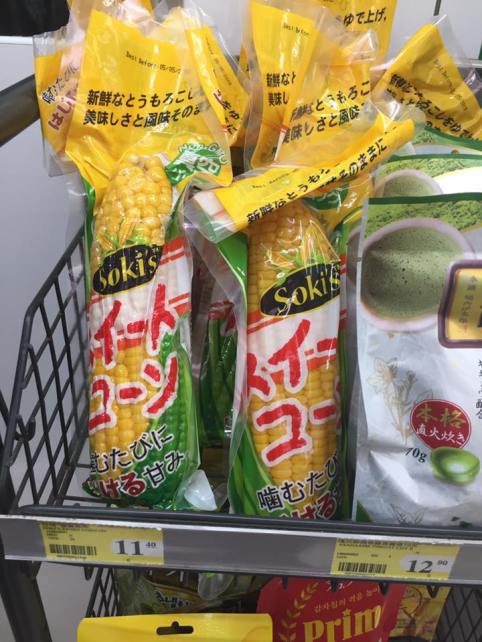
Bonus food item I didn’t try: you can buy vacuum-sealed, fully-cooked corn on the cob at 7/11 in Hong Kong. The writing on the package is in Japanese.

 Pass The Flamingo: Ancient Food History and Recipes
You must be logged in to post a comment.