Ancient Recipe: Asparagus Patina (Roman, 4th century CE)

Asparagus patina is made like thisPut in the mortar asparagus tips. Crush pepper, lovage, green coriander [cilantro], savory and onions; crush, dilute with wine, liquamen [fish sauce] and oil. Put this in a well-greased pan, and, if you want, add while on the fire some beaten eggs to thicken it, cook without boiling the eggs and sprinkle with very fine pepper. ~ De Re Coquinaria (On Things Culinary) or Apicius, Book II
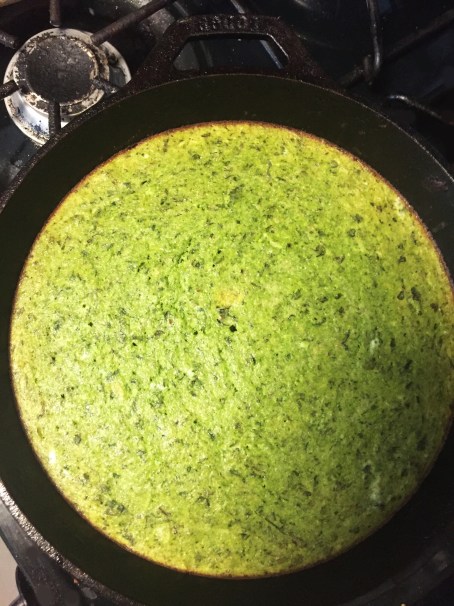
patina cooked

Originally, a patina was a specific type of Roman pottery; a round, flat, shallow dish. Over time, the word came to be used for the food cooked in the dish, not just the dish itself (compare modern terms like barbecue, hot pot, and terrine). The 4th-century Roman cookbook Apicius has a whole chapter devoted to patina recipes, including patinae of vegetables, fruits, meat, fish, and my personal favorite, calf’s brains and roses. The only common ingredient is ovae, eggs. As such, modern authors have often characterized patina as similar to a modern frittata, raw beaten eggs mixed with other ingredients and baked until solid. But the recipes in Apicius use eight different verbs to describe methods of incorporating eggs into patina, implying that the term was a general one covering everything from baked scrambles to delicate, airy soufflés. There were also egg-free variations, as in the recipe above, which instructs you to add beaten eggs only si volueris, “if you want”.

An element of surprise or trickery is found in many Roman dishes, making the food itself a form of table-side entertainment as guests attempt to identify what’s front of them. This celebration of the transformative aspects of cooking is found in many cultures, from Medieval European sugar-sculpted “subtleties” to the old Korean tradition of reshaping fruits and nuts into a confection shaped like the original. With its brilliant green color and the unusual step of pureeing the asparagus, I can imagine a group of Roman diners being similarly charmed and surprised by this recipe. I’ve made it for an Ancient Roman dinner I hosted and for my classes on Roman food, and it holds up to a modern taste-test quite well. It is named in the text of Apicius as “aliter patina de asparagis“, “another asparagus patina“, because there is a similar recipe immediately preceding it. The first asparagus patina is almost identical except for one ingredient: the meat of tiny birds called ficedulae (literally “fig-peckers”), three of them for one patina. I’ll be saving that for another time.

THE RECIPE

As it doesn’t deviate far from the modern palate, this is one of the most popular Ancient Roman recipes for revival, and there are numerous modernized versions out there. I mainly follow Cathy Kaufman’s reconstruction in her book Cooking in Ancient Civilizations (2006), but this recipe can also be found in other great books about Roman cooking, like A Taste of Ancient Rome (1994) and The Classical Cookbook (2012). The original Latin says to strain the crushed vegetable and wine mixture, a step which some translators follow and others, like the one quoted above, don’t. I personally think the recipe is better if you don’t strain. Roman vegetables were tougher and stringier than our vegetables, so this step was probably necessary to make 4th-century asparagus more palatable, but most modern asparagus will turn out sufficiently soft anyway.

Modern fermented fish sauce (available where Asian groceries are sold) will stand in for the near-identical Roman version. Savory and lovage are two herbs used in this recipe that you might not be familiar with, as they are less-popular today than they were in historical times. Savory is one of the traditional components of herbes de Provence and has a slightly bitter, spicy flavor. If you can’t find it, use thyme, marjoram or sage. Lovage has a similar flavor to celery, and crushed celery seed or the inner leaves of celery make a good substitute. All these substitutions were plants known to the Romans, so perhaps a strapped 4th-century chef might have done the same. The presence of pepper in the recipe hints at the intended audience of Apicius: enslaved or formerly-enslaved career chefs laboring in the kitchens of the wealthy. In Rome, pepper (known in three forms, black, white, and long) was a costly dried import from India. Households of more limited means used only fresh green herbs as seasoning.
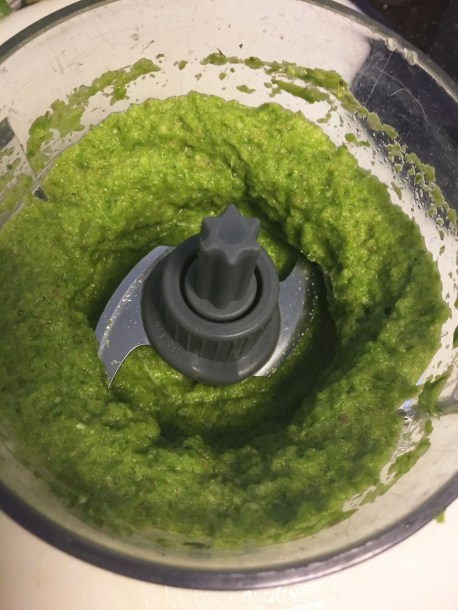
raw patina

Asparagus and herb mixture.

First, gather your non-liquid ingredients: six eggs, 1 bunch of asparagus (trimmed), 1/4 cup chopped onion, 1/4 cup cilantro leaves, 1/4 teaspoon ground black or long pepper, 1 teaspoon dried savory or sage, and 1/8 teaspoon celery seed or lovage.

You will also need 1 tablespoon of olive oil (plus more for the dish), 1/2 a cup of white wine, and 1 tablespoon of fish sauce.

Preheat the oven to 400 °F. Spread the inside of a one-quart gratin dish, pie dish, or cast-iron skillet with oil.

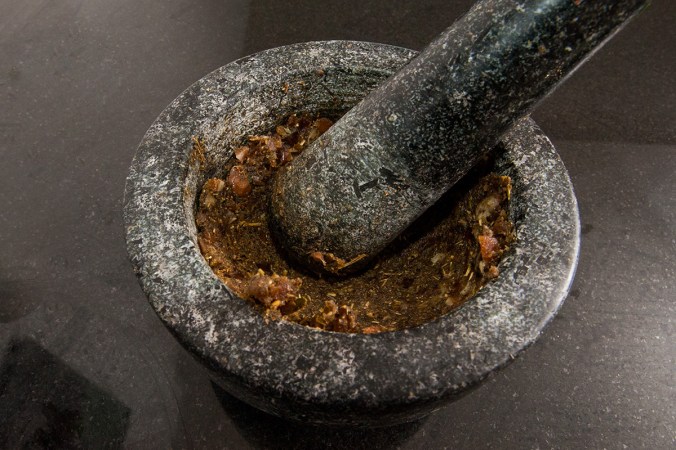
Puree all the ingredients except the eggs in a food processor or a mortar and pestle. Depending on the size of the equipment you are using, you may find it necessary to mash up the asparagus first and then add it to the other ingredients. Make sure everything is combined to a smooth, even texture. Beat the six eggs and add them to the pureed vegetables. Mix well to combine, and pour the mixture into the dish. Bake until set (about 35-40 minutes. If a fork or chopstick inserted into the center comes out clean, the patina is done). Serve with fresh cracked pepper.
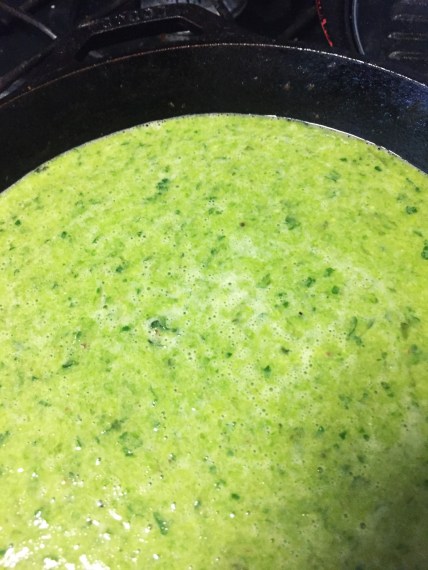
patina 2

Raw patina about to go into the oven.

THE VERDICT

The predominant flavor in this dish is, of course, asparagus, but the spices and herbs come through quite nicely. It’s best-served and eaten with a spoon, as it has a mushy texture. It goes well with crusty bread, white wine, and, I’m assuming, fig-peckers. VIII out of X.


Ancient Recipe: Braised Flamingo (Roman, 5th century CE)

_DSC3235_02“Epicures regard my tongue as tasty. But what if my tongue could sing?” ~ A flamingo in Martial’s Epigrams laments his wasted potential
In case you couldn’t tell from the blog title, I have a special fondness for that marvelous pink monstrosity, the flamingo. Why? Because everything about them is weird. In their pained, awkward movements, they remind me of the borogoves from Lewis Carroll’s Jabberwocky; “thin, shabby-looking birds” who are perpetually “mimsy” (miserable and flimsy). They thrive on lakes of poison where few animals larger than the plankton they eat can survive, striding comfortably through boiling brine and laying eggs inches from gaseous fumes. They have naturally white feathers that change to pink from a diet rich in beta carotene, the same chemical that makes carrots orange. Their outlandish color and unique profile has made the flamingo the icon of American tropical kitsch and the unofficial mascot of Florida, and official mascot of the Bahamas.

But to the Ancient Romans, they were food.

Not that we should imagine Roman storefronts selling flamingo pie, fried battered flamingo bites, flamingo on a stick, etc. Nor should we picture vast leggy herds of flamingos corralled in the Roman countryside, although the poet Martial makes a tantalizing reference to flamingo husbandry in his Epigrams (3.58.14), describing them alongside other exotic livestock on a wealthy man’s farm in Baia (modern Naples). Native to the salt lakes of Africa, the flamingo was eaten in Rome only by those who could afford it. In Roman times, having a roast fenicopterus (“scarlet-wing”) on the table was a status-symbol and a means of flaunting one’s riches. Truly wealthy gourmets ate only the choicest parts, like the brains and tongue. Emperor Elagabalus was even said to offer the costly birds in sacrifice to the gods, when a regular old chicken would have done just fine.

The 5th-century cookbook Apicius, the most complete primary source on Ancient Roman cooking, features a recipe for flamingo in spiced date sauce with a note that “parrot is served the same way”:

Scald the flamingo, wash and dress it, put it in a pot, add water, salt, dill, and a little vinegar to be parboiled. Finish cooking with a bunch of leeks and coriander, and add some reduced must [grape juice] to give it color. In the mortar crush pepper, cumin, coriander, laser root, mint, rue, moisten with vinegar, add dates, and the fond [drippings] of the braised bird, thicken, strain, cover the bird with the sauce and serve. ~ Apicius 6.231

So what was it like to eat a flamingo? Was the taste really worth the trouble of acquiring the creature, or did Roman patricians eat them for show? Unfortunately the Romans left no firsthand testimony behind, aside from a passing mention in Pliny the Elder’s Natural History that flamingo tongue has “the most exquisite flavor”. And flamingo meat is not exactly easy to come by. The birds are protected by law in the United States (where I live) and in many other countries as well. But we can make a few educated guesses. Like all waterbirds, flamingos have an insulating layer of fat. This means that eating flamingo is likely a several-napkin affair, and that their meat, like duck, is probably rich and dark. For flavor we might look to ducks as well, specifically a wild-caught fish-eater like a merganser or scaup, species usually scorned by modern hunters for their pungent flavor. In a 2009 article describing an increase in flamingo consumption in India, one scientist is skeptical of their popularity: “As a rule, all fish-eating or carnivore birds, the flesh of these birds is stinky. It never tastes good.

We may never know exactly how stinky was the flesh of a Roman flamingo (although it’s worth noting that the flamingo recipe appears in Apicius directly after a technique for removing foul odor from wild birds). And while I don’t want to rule out the possibility of my eating a merganser someday, today is not that day either. I decided to use a store-bought, farm-raised duck; milder in flavor but not too dissimilar from the ducks eaten in Ancient Rome. I also decided to go full ancient-style and buy a duck with the head and feet still on.

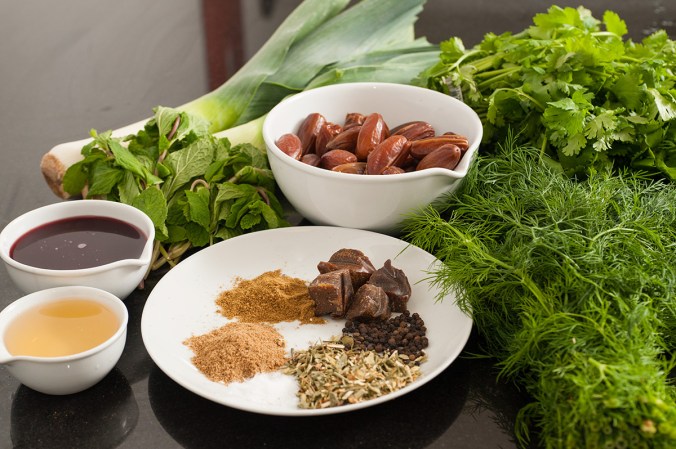
_DSC3125Those brown chunks on the plate are pieces of asafetida or hing, a dried plant resin that will stand in for laser root. Also called silphium, laser was so popular in antiquity that the Romans over-farmed it into extinction. Asafetida makes a great substitute because it’s the silphium plant’s nearest living relative. It has a pungent flavor reminiscent of cooked onions, and can be found online and at South Asian grocery stores.
The dried leaves on the plate are rue, a bitter herb which was very popular in the ancient world but today is rarely used in food, except in Ethiopia. I ordered it on Amazon. Use caution if you plan to cook with rue; some people are allergic. If you’d rather play it safe, you can substitute rosemary or sage.

THE RECIPE

Parboiling before roasting as described in Apicius is a good technique that I have used on duck before. It tightens the skin and renders out a lot of the fat so that it doesn’t become a greasy, splattery mess in the oven. Presumably the same could be said of flamingo (where did the Romans find a pot, and an oven, big enough? How did they deal with the neck and the legs?)

I washed and dried my flamingo substitute and trimmed off the extra fat, claws and wingtips. Then I poked holes in the skin all over with a fork to help the fat leak out during cooking (I remembered this from modern roast duck recipes).

Next I brought a large pot of water to a boil and put my whole duck in head first, together with a large pinch of salt, a quarter cup of white wine vinegar and about half a bunch of fresh dill. While my duck was boiling, I reduced one and a half cups of grape juice in a saucepan and added a cornstarch slurry to thicken it (only semi-anachronistic. The Romans didn’t have corn, but they did use starch powder extracted from raw wheat). I lifted my duck out of the boiling water and into a roasting pan with a rack after 25 minutes.

I was confused by Apicius‘s instruction to “finish cooking with a bunch of leeks and coriander [cilantro].” Roasted leeks, sure, but it doesn’t make sense to roast a bunch of fresh herbs, so I guessed that some sort of preparation was being implied. I chopped the cilantro, mixed it into the thickened grape juice and basted the duck with the mixture before putting it in the oven at 350 degrees. I didn’t have room for the duck and the leeks together, so I put them in separate pans.

Now it was time for the sauce. Like all ancient cookbooks, Apicius doesn’t use precise measurements, so I mixed together my spices through a combination of gut instinct, taste-testing, and the silent guidance of the Lares and Penates, the Roman household gods. I tried to keep everything equal, using half a tablespoon each of asafetida, powdered cumin, powdered coriander, dried mint, dried rue, and black peppercorns, plus 3/4 of a cup finely-chopped dates and a splash of white wine vinegar. I mashed everything with a mortar and pestle until I had a thick, gummy brown paste._DSC3166_01

My duck cooked for about 45 minutes, and I turned the heat up to 450 for the last ten minutes to brown the skin. Once the bird was out of the oven, I added the drippings to my paste and heated it in a saucepan. This step is important to mellow the flavor of asafetida, which is pretty nasty raw. Apicius says “thicken”, but the sauce was already so thick I actually added water to it, which didn’t really help. I realized after the fact that the Romans probably used fresh rue and mint leaves in this recipe instead of dried, which would have added more moisture. My sauce had the consistency of jam, and in the end I had to spread it on the duck with the back of a spoon rather than pouring it on top.

_DSC3209_02THE VERDICT

I tend to make a “Hmm!” noise of curiosity when I taste something unusual that isn’t exactly good or bad. My boyfriend told me that all he heard from the kitchen at this point was one “Hmm!” after another. The sauce is really the star of the show here. The combination of flavors was bold, complex, and totally unfamiliar: truly Ancient Roman. I could taste each ingredient separately. First came the sweetness of the dates and the punch of the asafetida, then a tea-like bitterness from the rue, a hint of coriander and cumin, and the bite of black pepper at the very end. (The only flavor that seemed to get lost was the mint). It was overpowering on its own, but in small quantities balanced the milder flavors of the duck and the leeks quite nicely. I could see why a strong-tasting sauce might be necessary on a strong-tasting meat like flamingo.

I may never know what a real Roman flamingo tasted like, but now I have some idea. Next time I’ll try using fresh herbs and whole seeds and a bit less asafetida (or more mint) in the sauce. Overall, a surprising and interesting dish. VII out of X.

POST SCRIPTVM: This was my first time eating a duck’s head, and it was AMAZING. Especially the brain. Now I know what Elagabalus was talking about.

POST POST SCRIPTVM: FELIX IDES MARTIAE, everyone. What better day to post my first ancient recipe?